|
|

Topography
Looking from the view of topography, the upper area is formed with, what is called the Japanese roof, steep Northern Japan Alps mountains and flat ground such as the Nagano basin. The lower area is formed with the Echigo plain, created by lots of soil and sand delivered by the water of the Shinano River. The surrounding inhabitants of the Shinano River hold its calming influence especially on the border of the prefectures where you can find the river terraces.
The length and the area
The Shinano River is 367km in length, and is as long as the distance between Niigata and Tokyo. It is the longest river in Japan. The area of the Shinano basin is 11,900km2, which is as wide as the area of Niigata prefecture.
| Five longest rivers in Japan |
| Ranking |
Name of the river |
Length(km) |
| 1 |
The Shinano |
367 |
| 2 |
The Tone |
322 |
| 3 |
The Ishikari |
268 |
| 4 |
The Teshio |
256 |
| 5 |
The Kitakami |
249 |
| Five widest areas of the river basin |
| Ranking |
Name of the river |
Area(km2) |
| 1 |
The Tone |
16,840 |
| 2 |
The Ishikari |
14,330 |
| 3 |
The Shinano |
11,900 |
| 4 |
The Kitakami |
10,150 |
| 5 |
The Kiso |
9,100 |
The number of river branches of the Shinano River is second in Japan. Each river branch gives all kinds of benefits to people living in the river basin.
| Top 5 ranking number of river branches in Japan |
| Ranking |
Name of the river |
Number of river branches |
| 1 |
The Yodo |
962 |
| 2 |
The Shinano |
880 |
| 3 |
The Tone |
805 |
| 4 |
The Fuji |
555 |
| 5 |
The Tsukihiro |
475 |
Inclines
Since 70% of Japan is mountainous, water flows nonstop from the source of a river, in the mountains to the sea. The incline of the rivers are steep, so water flows fast.
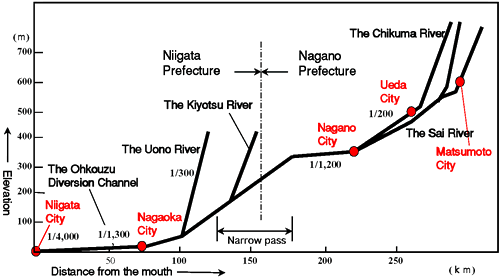
Extension and inclination of the Shinano River
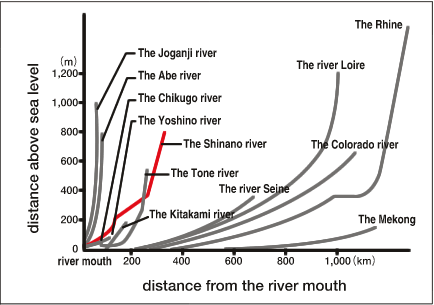
Inclines of rivers
 UP UP
|




